



Serving All 50 statesBed Bugs Answers connects you with licensed local pest control companies. We are not a pest control contractor.
info@bedbugsanswers.com
Complete guide

Bed bug treatment, from the first figure to the follow-up

Bed bug heat treatment explained: 113 °F is the minimum lethal temperature, eggs need far longer than adults, and the follow-up visit is timed to the egg.

Bed bug treatment, from the first figure to the follow-up

What does bed bug heat treatment actually do?

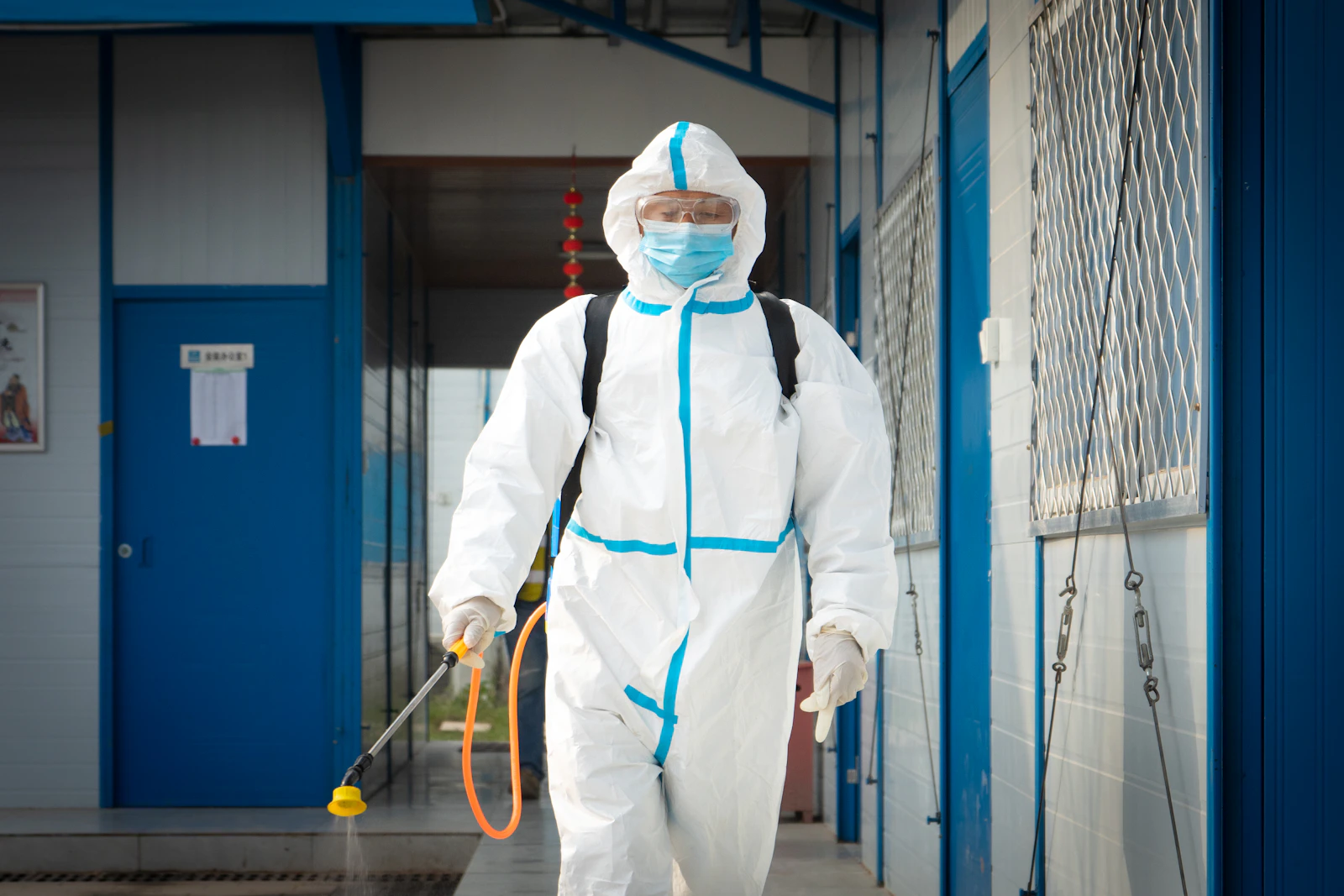
Bed bug heat treatment raises the temperature of a room and its contents until the insects' own body temperature reaches a lethal level and holds there long enough. The minimum is 113 °F, measured at the bug. Whole-room services run hotter — commonly 120 to 140 °F — because the target is the coldest hidden spot, not the air.

Bed Bugs Answers connects you with licensed local pest control companies. We are not a pest control contractor. Every figure below carries a named source and the date it was checked.

What temperature kills bed bugs, and how long does it take?

The temperature and the clock are one figure, not two. At 113 °F an adult bed bug reaches 99% mortality after 94.8 minutes, with a 95% confidence interval of 82.0 to 125.3 minutes. An egg at the same temperature needs 428.5 minutes — about seven hours. Raise the temperature to 118.4 °F and the egg dies in 71.5 minutes.

That is the sentence carrying the whole subject: eggs are the hard target, and a heat treatment is timed for the eggs rather than the adults. The same study puts the lethal temperature for adults under a ramped exposure at 118.9 °F and for eggs at 130.6 °F, and its own whole-room recommendation is 118.4 °F held for 71.5 minutes, or stopping once at least 122 °F has been reached in every site where bed bugs may hide.

The margin between 113 °F and the figures quoted for commercial services is not padding. UC IPM cites at least 140 °F for two hours, or 130 °F for three hours; EPA's practical figure for heating articles or areas is at least 120 °F for 90 minutes so that eggs are killed. A room at 135 °F with a bug in a wall void at 105 °F is a failed treatment, which is why the number that matters is the coldest harborage rather than the thermostat. Documented failures follow exactly that pattern — lethal temperature never achieved in the harborage for long enough, and re-infestation from insects that escaped to cooler areas during the treatment.

Heat also has one property nothing else here has. When researchers selected bed bugs for heat resistance in the laboratory, survivorship rose for the first few generations and then stopped improving, and tolerance did not vary significantly between strains; their conclusion was that the ability of bed bugs to develop heat resistance appears to be limited. Set against the pyrethroid picture further down this page, that is the strongest single argument for why heat is used at all.

And one property it does not have: heat leaves no residual. It kills what it reaches, on the day, and does nothing to stop bed bugs walking back in.

What temperature kills bed bugs, and how long does it take?

What do the sourced figures say?

Figures as cited in Sources below
QuestionSourced answerSource
Minimum lethal temperature113 °F, at the insectUS EPA; UC IPM 7454
Adults at 113 °F94.8 min for 99% mortality (CI 82.0–125.3)Kells & Goblirsch 2011
Eggs at 113 °F428.5 min ≈ 7 hours (CI 344.0–606.3)Kells & Goblirsch 2011
Eggs at 118.4 °F71.5 minKells & Goblirsch 2011
Commercial whole-room heating≥140 °F for 2 h, or 130 °F for 3 hUC IPM 7454
Heating articles or areas≥120 °F for 90 min, to kill eggsUS EPA
Freezing infested items0 °F for ≥3.5 days; EPA says below 0 °F for ≥4 daysOlson et al. 2013; US EPA

How do you get rid of bed bugs quickly?

Faster than the sources allow is not on offer, and that is the useful answer. EPA's position is that treating bed bugs is complex and can take weeks to months; Cornell puts the minimum realistic timeline at three weeks, with preparation taking about a week.

The 14-day interval between visits is not sales strategy — it is egg hatch. Chemical sprays rarely kill eggs. MSU Extension specifies that conventional chemical treatment requires at least one follow-up visit about 2 weeks later to catch newly hatched nymphs before they mature and lay more eggs.

What can be done this evening is containment: put bedding and clothing through the dryer on the highest heat setting for at least 30 minutes, seal laundered items in plastic bags, and isolate clean items away from the bed. Decluttering is MSU Extension's vital first step, because clutter gives bed bugs places to hide that steam, vacuuming and sprays cannot reach.

How do you get rid of bed bugs quickly?

Can you get rid of bed bugs permanently?

Nothing in the sources supports a promise of permanence, and no page here will make one. Heat leaves no residual. Fumigants leave no residual. Re-infestation from insects that escaped to cooler areas is a documented failure mode. What can be answered is what reduces the chance of it happening again.

  • Mattress and box spring encasements — sealed covers keep bed bugs from establishing harborage in the mattress, and bugs sealed inside eventually die of starvation.
  • Interceptors under bed legs — UC IPM research found interceptors trapped 6 times more bed bugs than visual inspection alone.
  • Vacuuming seam perimeters — repeat vacuuming reduces population density, though UC IPM notes non-chemical controls alone are difficult, less effective, and resource intensive.
  • Disposal of infested items — when a piece of furniture must be discarded, UC IPM advises taking it to the dump or marking it clearly as infested, and EPA recommends destroying it so it is not brought into another home.
Can you get rid of bed bugs permanently?

Why does spraying on its own so often fail?

Because pyrethroid resistance in US bed bug populations is effectively universal. In the largest survey to date, 394 populations across 38 states were screened in two windows. In 2005–2009, 2.5% — four of 161 — were wild-type and pyrethroid-susceptible. In 2018–2019, the susceptible genotype was not detected at all in the 233 populations sampled.

Earlier work had already shown the scale. Field populations from Kentucky and Ohio returned resistance ratios above 12,765-fold to deltamethrin and above 6,123-fold to λ-cyhalothrin against a susceptible strain, and the 2007 conclusion was that pyrethroid resistance was already widespread across the United States. A 2010 survey of 110 populations found 88% carrying target-site kdr mutations. By 2018–2019 the L925I and V419L double mutation was present in 84% of populations, against 50% in 2005–2009.

Be precise about what that means. These are target-site mutations in the voltage-gated sodium channel — the site pyrethroids act on. Carrying them is strongly associated with resistance, but a genotype is not a bioassay of every product, so the accurate statement is that these populations carry the mutations associated with pyrethroid resistance, not that they are immune to everything. None of it is new, either: bed bugs were widely resistant to DDT by the mid-1950s, with resistance reports dating to 1958.

UC IPM's plain version is that some bed bug populations have developed resistance to pyrethroid insecticides and can no longer be effectively controlled by them, and that insecticide applications alone will not control an infestation. CDC and EPA go further in their joint statement: some bed bug populations are resistant to almost all pesticides registered to treat them. One consolation sits in the data, though — resistance carries a fitness cost. In a starvation study, every immature and adult stage of the resistant strains died sooner than the susceptible ones.

Why does spraying on its own so often fail?

Does an apartment change how bed bugs are treated?

The thresholds do not change; the difficulty does. CDC and EPA state that control in multi-family homes is much more difficult than in single-family homes, because bed bugs frequently travel between units — carried directly by people, or through voids in the walls. That is a containment problem stacked on top of a treatment problem, and it is the reason a plan drawn for one household in one structure is the wrong plan for a unit in a shared building.

It also changes what to expect from the visit. EPA advises preparing for multiple visits, because very few infestations are controlled with only one treatment, and looking for companies that offer two or more service visits with follow-up. What a professional should be doing on site, in EPA's own description, is inspecting the residence, taking furniture apart if necessary, and using vacuums, heat and pesticides — with monitoring afterwards for anything missed.

Settings where infestations are documented run well past apartments: shelters, rooming houses, hotels, nursing homes, hospitals, cruise ships, buses, trains and dorm rooms. UC IPM notes that bed bugs were once thought to be associated primarily with crowded and dilapidated housing, and that they can now be found even in the finest hotel and living accommodations. The reasons it gives are increased global travel and commerce, ease of movement of infested items, widespread insecticide resistance, and changes in available pesticides.

Does an apartment change how bed bugs are treated?

How do you deal with the mattress?

Encase it before you think about replacing it. Protective covers that seal a mattress and box spring have been shown effective in laboratory research, and bed bugs sealed inside eventually die of starvation. Vacuum the seams of the mattress and box spring first, along with carpet perimeters and under baseboards — and repeat it, because a single pass rarely gets everything.

If the mattress or a piece of furniture does have to go, how it goes matters. Do not leave it on the curb or the porch. UC IPM's advice is to take it to the dump or mark it clearly as infested; EPA's is to slash or in some way destroy it, so it is not carried into someone else's home.

Cold is the route for items that cannot be heated, and its numbers are stricter than people expect. Bed bugs are freeze-intolerant, with a lower lethal temperature of −31.2 °C across all life stages, but survival was estimated above −12 °C even after a week of continuous exposure. The practical recommendation from that work is holding infested items at 0 °F for a minimum of 3.5 days, reducible to 48 hours below −20 °C. EPA's version is below 0 °F for at least 4 days, with the warning that DIY freezing may not be a reliable method — many domestic freezers do not hold 0 °F. UC IPM's separate figure of 32 °F for several days is a warmer, slower proposition, and the two are not interchangeable.

How do you deal with the mattress?

Sources

Every figure on this page traces to one of these. Ranges are reported as ranges.

checked 2026-08-18

Heat, temperature and exposure time

  • Kells & Goblirsch 2011, Insects 2(3):412–422, doi:10.3390/insects2030412
  • US EPA, Controlling Bed Bugs Using Integrated Pest Management
  • US EPA, Top Ten Tips to Prevent or Control Bed Bugs
  • UC IPM Pest Notes Publication 7454, Bed Bugs, May 2013
Heat treatment failure modes and heat resistance

  • Ashbrook, Scharf, Bennett & Gondhalekar 2019, PLoS One 14(2):e0211677
  • UC IPM Pest Notes 7454

Cold and freezing

  • Olson, Eaton, Kells, Morin & Wang 2013, J. Econ. Entomol. 106(6):2433–2441
  • US EPA, Do-it-yourself Bed Bug Control
  • US EPA IPM page
  • UC IPM Pest Notes 7454

Pyrethroid resistance

  • Lewis, Levine, Schal, Vargo & Booth 2023, J. Pest Sci. 96:415–423, doi:10.1007/s10340-022-01505-4
  • Romero, Potter, Potter & Haynes 2007, J. Med. Entomol. 44(2):175–178
  • Zhu et al. 2010, Arch. Insect Biochem. Physiol. 73(4):245–257
  • CDC & EPA Joint Statement on Bed Bug Control in the United States, 2010
  • UC IPM Pest Notes 7454

Fitness cost of resistance and starvation survival

  • Polanco, Miller & Brewster 2011, Insects 2(2):232–242, doi:10.3390/insects2020232

Life cycle and egg hatch

  • UC IPM Pest Notes 7454
  • Cornell / NYS IPM Bed Bug FAQs

Visits, timeline and multi-family housing

  • US EPA, Hiring a Pest Management Professional for Bed Bugs
  • US EPA, Do-it-yourself Bed Bug Control
  • MSU Extension, What to expect after bed bug treatment
  • Cornell / NYS IPM, Managing Bed Bugs and Bed Bug FAQs
  • CDC & EPA Joint Statement 2010

Preparation, laundry and disposal

  • MSU Extension, Preparing your home for bed bug treatment
  • US EPA IPM page
  • US EPA, Do-it-yourself Bed Bug Control
  • US EPA, Top Ten Tips
  • Cornell / NYS IPM, Managing Bed Bugs
  • UC IPM Pest Notes 7454

Encasements, interceptors and IPM methods

  • UC IPM Pest Notes 7454
  • US EPA, Do-it-yourself Bed Bug Control
  • CDC & EPA Joint Statement 2010

Safety

  • US EPA, Safety Issues in Controlling Bed Bugs
  • US EPA, Should I Use a Fogger?
Every guide

Every answer

Bed bugs in apartments and multi-family buildings

Bed bugs in apartments and multi-family buildings

Bed bugs travel between apartment units through shared walls. Sourced CDC/EPA guidance on why multi-family treatment is harder than single-family homes.

Read guide →
Bed bug eggs

Bed bug eggs

Bed bug eggs are about 1/20 inch, hatch in 10-15 days, and survive heat and cold far longer than adults. Sourced figures on why eggs are the real target.

Read guide →
Bed bug life cycle and survival

Bed bug life cycle and survival

Egg to adult takes 5 weeks to 4 months. Adults can survive months without feeding. Sourced life-cycle stages, feeding intervals, and the survival-time debate.

Read guide →
Bed bug bite treatment

Bed bug bite treatment

Bed bug bites can take up to 14 days to appear and rarely need medical treatment. Sourced CDC guidance on symptoms, reactions, and when to see a doctor.

Read guide →
Chemical treatment and sprays

Chemical treatment and sprays

0% of 233 US bed bug populations tested pyrethroid-susceptible in the latest survey. Sourced resistance data on why spray-only treatment so often fails.

Read guide →
Bed bugs in clothes and laundry

Bed bugs in clothes and laundry

Bed bug laundry treatment explained with sourced dryer times, why washing alone isn't enough, and how to bag and store clothes so they don't get reinfested.

Read guide →
Bed bugs in a couch or other upholstered furniture

Bed bugs in a couch or other upholstered furniture

Bed bugs in a couch, chair or other upholstered furniture: where they sit outside the bed, why fogging rarely reaches them, and when a piece has to go.

Read guide →
Diatomaceous earth and dusts

Diatomaceous earth and dusts

Diatomaceous earth is a federally-listed non-chemical option for bed bugs, but only registered products — EPA warns pool and food grade can harm you to breathe.

Read guide →
DIY vs. professional exterminator

DIY vs. professional exterminator

Foggers are ineffective per peer-reviewed research; non-chemical methods alone are 'very difficult.' A sourced, honest look at DIY vs. professional treatment.

Read guide →
Getting rid of bed bugs permanently

Getting rid of bed bugs permanently

No treatment method leaves lasting protection — heat and chemicals have no residual effect. What actually prevents bed bugs from coming back, sourced.

Read guide →
Heat treatment temperature

Heat treatment temperature

113 °F is the minimum lethal temperature for bed bugs; eggs need much longer. Sourced time-and-temperature figures from peer-reviewed heat research.

Read guide →
Hiring an exterminator

Hiring an exterminator

Expect multiple visits and ask about canine detection accuracy — 44% in real apartments vs. 97.5% in the lab. Sourced guidance for hiring a licensed provider.

Read guide →
Hotel room inspection

Hotel room inspection

Bed bugs turn up in the finest hotels, not just budget ones. Sourced inspection steps: where to check, what confirms an infestation, and how far they travel.

Read guide →
How heat treatment works

How heat treatment works

Professional heat treatment raises a room well above the minimum lethal temperature to reach cold spots. Sourced mechanics of why it works, and why it can fail.

Read guide →
How long bed bug treatment takes

How long bed bug treatment takes

EPA says weeks to months; Cornell says at least three weeks minimum. Sourced timeline for bed bug treatment, and why the egg sets the schedule.

Read guide →
Bed bugs in luggage and travel

Bed bugs in luggage and travel

Bed bugs spread mainly by being carried in luggage and vehicles, not on their own. Sourced steps for checking bags and cars carefully after any trip.

Read guide →
Bed bugs in the mattress and box spring

Bed bugs in the mattress and box spring

Bed bugs in a mattress or box spring: why 85% of an infestation lives right there, what encasement and heat actually do, and when the mattress has to go.

Read guide →
Pesticide resistance in bed bugs

Pesticide resistance in bed bugs

0% of 233 US bed bug populations tested pyrethroid-susceptible by 2018-2019. Sourced resistance data going back to the 1950s, and what it means for treatment.

Read guide →
Bed bug treatment safety around pets and children

Bed bug treatment safety around pets and children

111 documented pesticide illnesses and one death from bed bug treatment misuse, 2003-2010. Sourced safety guidance for households with pets and kids.

Read guide →
Preparing for bed bug treatment

Preparing for bed bug treatment

Declutter, bag and don't move items between rooms. Sourced preparation steps from Michigan State University Extension before a bed bug treatment visit.

Read guide →
Preventing bed bugs

Preventing bed bugs

Encasements, decluttering, monitoring, and inspecting secondhand items are the sourced prevention steps — cleanliness alone is not protection.

Read guide →
Signs of bed bugs

Signs of bed bugs

A bite is not proof of bed bugs. What confirms an infestation, per CDC and UC IPM: fecal spots, shed skins, eggs, live insects, and a musty odor.

Read guide →
Steam treatment for bed bugs

Steam treatment for bed bugs

Steam needs to reach at least 130 °F at the surface to kill bed bugs. Sourced figures on steam temperature, airflow risk, and what steam can't reach.

Read guide →
Bed bug treatment cost

Bed bug treatment cost

No national price figure for bed bug treatment is reliably sourced. What actually drives the cost: infestation extent, method, visits, and preparation.

Read guide →
Bed bug treatment methods

Bed bug treatment methods

Heat, steam, chemical sprays, and dusts each work differently against bed bugs. A sourced comparison of what each method does and where it falls short.

Read guide →
Questions

Frequently asked

The questions people actually type at two in the morning.

Can a heat treatment fail even though the room got hot?

Yes, and the reason is always the same: lethal temperature was never achieved in the harborage for long enough. Cold spots inside wall voids, deep cracks and dense contents are the usual culprits, and insects that escape to cooler areas during the treatment can re-infest afterwards. One documented example makes the point sharply — a mattress wrapped in black plastic in the sun reached 85 °C on its upper surface while the lower surface stayed below lethal temperature.

How do you get rid of bed bugs in a car?

No source in our research measures a vehicle interior, so we will not publish a figure for one. What carries across is that the thresholds are properties of the insect rather than of the room: 113 °F sustained is still the minimum, and removable fabrics can go in a dryer on the hottest setting for at least 30 minutes. What must not carry across is chemistry — EPA is explicit that you should never use a pesticide indoors that is intended for outdoor use, and that rubbing alcohol, kerosene and gasoline can easily ignite with a spark or a cigarette.

How many treatment visits should I expect?

At least two. EPA advises preparing for multiple visits because very few infestations are controlled with only one treatment, and to look for companies that offer two or more service visits with follow-up. MSU Extension puts a conventional chemical programme at at least one follow-up two weeks later. We will not publish a total number or a total duration as a promise: EPA's own range for the job is weeks to months.

Why does the egg decide the schedule?

Because insecticides often do not kill it and it takes about 10 to 15 days to hatch at room temperature. A female lays 200 to 500 eggs over a lifetime, usually 2 to 5 a day, each about 1/20 inch. There are five nymphal stages, each needing at least one blood meal before molting, and egg to adult takes five weeks to four months depending on temperature and blood availability, with development running quickest between 70 °F and 82 °F. The follow-up visit is placed to hit the newly hatched nymphs before they can molt and lay.

Do you publish a price for heat treatment?

No. There is no credible national price source for bed bug treatment, and no federal agency, extension service or peer-reviewed paper in our research publishes one, so any figure here would be invented. What we can tell you is what the number is built from: how far the infestation has spread, whether the building is shared, which method is used, how many visits are scheduled, and how much preparation falls to you.

Is seeing bed bugs after treatment a sign it failed?

Not on its own. MSU Extension's position is that there may be surviving eggs that will hatch, and that this does not mean the treatment was ineffective — which is exactly why a follow-up visit is scheduled two to three weeks out. What is worth agreeing in advance is the schedule itself, in writing, and what happens if the problem persists past it.

Get matched with a local bed bug company

Tell us what you found and where you found it, and we will put you in front of a licensed local company. No obligation either way.

Request a QuoteEmail Us